Choosing flooring for a baby playroom means looking beyond color, price, and easy cleaning. Crawling babies press their faces close to the surface, spill milk, and explore with their hands. The floor should cushion small falls, resist moisture, and release minimal chemical odors. Parents also need a surface that can be cleaned without leaving slippery residue. So, what is the safest flooring for baby playrooms? The honest answer depends on the room, the child’s age, ventilation, and installation quality. No floor is perfect. That matters.
This guide compares flooring options using practical safety criteria rather than marketing claims. It considers impact softness, slip resistance, smooth seams, indoor-air quality, hygiene, durability, and maintenance. Materials with independent emissions testing, clear manufacturer instructions, and recognized safety certifications deserve closer attention. A soft foam tile may feel comfortable, yet loose edges can create trip points and small detachable pieces. Carpet can reduce impact, but trapped dust and moisture may challenge families with allergies. Resilient flooring may clean easily, although its underlayment and adhesive still require careful review. Read labels. Check seams. Air out new materials according to guidance. A qualified installer can help prevent gaps, curling edges, and uneven transitions. Pediatric safety advice and reputable testing organizations can strengthen the decision, but household observation remains essential. Watch where spills collect. Notice whether the surface becomes slick after cleaning. Reassess as crawling becomes climbing. The safest choice is usually a well-installed, low-emission floor paired with secure furniture, washable play mats, and consistent supervision. Even experienced parents may overlook a tiny raised edge. A careful final inspection helps.
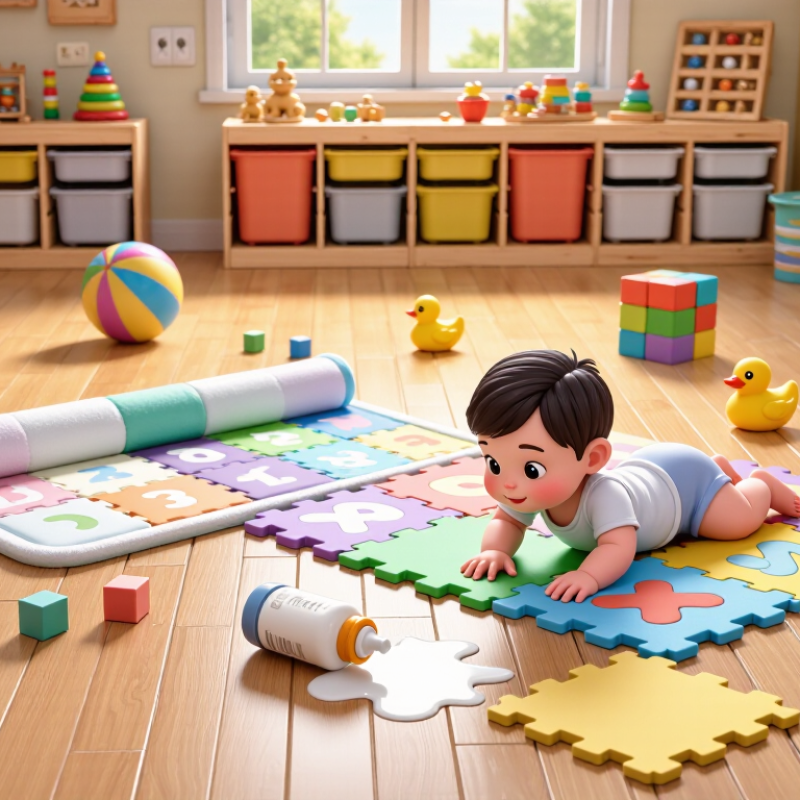
Safety starts with documented performance, not a soft feel. In a baby playroom, choose flooring intended for indoor use and ask for current, independent test reports. Standards vary by country and product type, so check which test method and edition were used. A vague “non-toxic” claim is not enough.
Prioritize indoor-air emissions testing, including testing for volatile organic compounds. Ask whether results cover the finished flooring, its backing, and any recommended adhesive. For foam or plastic surfaces, request relevant chemical test results, including tests for substances such as lead and phthalates. A dated report tied to the exact product is more useful than a list of standard names. Keep the paperwork.
Safety also includes falls and cleaning. Look for impact-attenuation data for the installed thickness; a thin layer may cushion knees but cannot prevent every injury. Check slip performance, seams, and whether edges stay flat when a baby pushes against them. Try your planned cleaner on a small area, then inspect for tackiness or color transfer. This check has limits. Replace cracked or lifting sections promptly, and follow the care instructions.
For a baby playroom, compare cushioning, cleanability, and wear—not just softness. Dense low-pile carpet can soften crawling and tumbles, but crumbs and dust settle between fibers. A washable area rug over a firm floor is easier to lift and clean, though it can bunch. Smooth vinyl or sealed wood allows quick wipe-ups; add a fitted play mat where babies spend time. Cork feels warmer and softer underfoot, but dents and surface damage can make cleaning harder. Small spills happen.
The U.S. EPA’s indoor-air guidance reports that some indoor pollutant concentrations may be two to five times outdoor levels. That figure is not specific to flooring, but it supports checking emissions documentation and ventilating after installation. The WHO’s 2021 air-quality guidelines set annual PM2.5 at 5 μg/m³; they are not flooring standards, yet settled dust is still worth controlling. For hygiene, favor surfaces with few seams and follow the manufacturer’s cleaning instructions. For durability, inspect wear-layer or finish specifications, and test a sample for slipperiness when dry and damp. I would not assume a soft surface is automatically safer; babies crawl, chew, and spill, and no single material wins every comparison.
Choosing a baby-room floor means balancing grip, cushioning, and clean indoor air. Test samples with dry and slightly damp socks; polished finishes can turn a small spill into a fast slide. Look for a stable surface that does not shift at the edges. ASTM International’s F1292 standard measures impact attenuation for playground surfacing using controlled drop tests. It can help compare cushioning, but it does not certify a household floor or promise injury prevention. Soft is not automatically safe.
Chemical safety matters, too. The U.S. Environmental Protection Agency reports that some indoor pollutant levels can be two to five times higher than outdoor levels, based on its TEAM studies of common organic pollutants. New flooring, adhesives, and underlays may emit volatile organic compounds. Ask for emissions test documentation, ventilate during installation, and let materials air out before your baby plays there. “Low odor” is not proof of low emissions. I would still check the test scope and product components.
Tips: Press down at seams and corners; reject curling edges or loose mats. Wipe a sample with a damp cloth, then check whether it feels slick. Keep a small test piece near a sunny window for several days, and notice any persistent smell. That is not a lab test, but it can reveal details a brochure misses.
| Flooring Type | Slip Resistance | Impact Protection | Chemical and Indoor-Air Considerations | Care and Practical Notes | Overall Consideration |
|---|---|---|---|---|---|
| Carpet or carpet tiles | Usually provides traction when clean and dry; spills, loose rugs, or curled edges can create slip or trip hazards. | Soft pile and underlay can cushion minor bumps, but ordinary household carpet is not necessarily tested or rated for fall protection. | Choose low-emitting materials and adhesives. New carpet may release odors and emissions; ventilate the room and follow installation guidance. | Vacuum and clean regularly. Check for loose seams, damaged backing, and moisture that could encourage mold. | Comfortable and cushioned, but cleanliness, secure installation, and indoor-air quality need attention. |
| Cork flooring | Often offers a naturally grippy surface, but finish, wear, and moisture affect traction. | Its resilient surface can feel more forgiving than hard tile or stone, though it is not a certified fall-protection surface by default. | Check the product and finish for emissions information; installation adhesives and sealants also affect indoor air. | Use the care instructions for the specific finish. Protect it from standing water and sharp or heavy objects that may dent the surface. | A resilient option; performance depends on the finish and product construction. |
| Rubber flooring | Many products provide good grip, but traction varies with surface texture, contaminants, and whether the floor is wet. | Can provide cushioning, but impact performance varies by thickness, backing, and installation. Do not assume it is suitable for fall protection without relevant test information. | Ask for ingredient and emissions disclosures, especially for recycled-content products. Odor alone does not establish whether a product is safe or unsafe. | Confirm that the product is intended for indoor residential use and follow its cleaning and ventilation instructions. | Potentially cushioned and grippy; verify product-specific impact and emissions information. |
| Luxury vinyl or other resilient sheet flooring | Texture and finish can improve grip, but smooth surfaces may become slippery when wet. | Generally more forgiving than stone or ceramic tile, but it is not a substitute for a tested impact-attenuating play surface. | Review emissions testing and material disclosures. Ask about plasticizers and installation adhesive; choose products with clear documentation. | Keep the surface dry and clean. Avoid products that require adhesives with unclear emissions information. | Easy to clean and often practical, but check wet traction and chemical documentation. |
| Hardwood or engineered wood | Can be slippery with socks, spills, or glossy finishes; use secure, non-slip play mats where needed. | Hard surface offers little cushioning compared with resilient flooring or a suitable play mat. | Consider emissions from finishes, coatings, and installation products. Allow new finishes to cure and ventilate as directed. | Wipe up spills promptly and keep mats flat and securely positioned to avoid trip hazards. | Durable and easy to clean, but add a stable cushioned play area for floor-level activities. |
| Ceramic or porcelain tile | Traction depends on the tile surface and grout; polished tile can be especially slippery when wet. | Very hard, with little impact cushioning. | Tile itself is generally a low-emitting surface, but grout, sealers, and adhesives should also be considered. | Clean spills quickly and check that grout and tile are intact. A securely placed play mat can soften the play area. | Easy to clean, but its hardness and wet-slip risk make cushioning and spill control important. |
How to use this comparison: Ratings are general, not guarantees; the exact product, finish, installation, and cleaning conditions matter. For babies who are crawling or learning to walk, prioritize a clean, dry, stable surface with secure edges. Ask manufacturers for product-specific slip, impact, and emissions documentation. A fall-impact test for playground surfacing does not automatically establish that a household floor is suitable for every playroom use.
A safe floor begins with a sound installation. The subfloor should be level, dry, and free of grit; even a small ridge can create a trip point or make play mats shift. Check that seams sit flush and edges do not curl. Small details matter. If adhesive is required, follow its label for ventilation and curing time, and keep babies out of the room until the area is ready for use. Ask the installer how long that will take.
Cleaning needs are easy to overlook when choosing flooring. Babies spend time close to the surface, where dust, crumbs, and dried spills collect. Choose a material that can be cleaned with simple, clearly specified products. Avoid assuming that more water or stronger cleaners mean a cleaner floor; excess moisture may damage some surfaces, while harsh products can leave residue. Follow the flooring maker’s care instructions, and test a cleaner in an inconspicuous spot when guidance is unclear.
Maintenance is part of safety, not just appearance. Inspect the floor regularly for lifted seams, cracks, splinters, or soft spots, especially around play areas and doorways. Wipe spills promptly, and check that any washable mat lies flat after cleaning. One honest drawback: softer surfaces can be harder to keep spotless, while firmer floors may need extra cushioning for crawling and tumbles. Revisit the room as your child grows; wear patterns and loose edges can be easy to miss.
A baby’s flooring should fit the child’s stage, not just look soft in a photo. A crawler needs a stable surface with enough grip to push up and change direction. Check that seams lie flat and edges do not curl, since little fingers and knees find them quickly. Softness matters, but a very plush surface can make crawling harder.
Room conditions matter just as much. In a cool room over concrete, a washable padded mat can add comfort; in a damp room, avoid materials that trap moisture. Follow the flooring maker’s cleaning and ventilation instructions, and let any new surface air out before play. If spills are common, choose a surface you can wipe without leaving a slick film. Keep loose rugs out of busy play areas.
Keep it simple. For a baby who mouths toys, prioritize easy cleaning and check for peeling layers or loose pieces. A floor may feel gentle under an adult’s hand but still be too firm for longer play, so watch how your baby moves on it. There is no perfect option: comfort, grip, cleanup, and room temperature can pull in different directions. Recheck the surface as your child starts crawling and pulling up.
Make sure the subfloor is level, dry, and free of grit. Check seams and edges. Small ridges can cause trouble.
Seams should sit flush, and edges should not curl. After washing, check that the mat lies flat.
Follow the product instructions for ventilation and curing time. Keep babies out until the area is ready. Ask the installer how long that takes.
Use clearly specified cleaning products and follow care instructions. More water is not always better. Test an unfamiliar cleaner in a hidden spot.
Check regularly, especially near doorways and play areas. Look for cracks, splinters, soft spots, and lifted seams.
Not necessarily. Very plush flooring can make pushing up and changing direction harder. Watch how your baby moves on it.
A washable padded mat may add comfort over a cool concrete floor. In damp rooms, avoid surfaces that trap moisture.
Recheck the surface when your baby starts crawling or pulling up. Wear patterns and loose edges can be easy to miss. Comfort and easy cleaning do not always come together.
Choosing the safest flooring for a baby playroom means looking beyond softness or appearance. Start by checking that the flooring is suitable for children’s spaces and meets relevant safety standards. Compare options for cushioning, comfort, hygiene, and durability, while considering how well each surface resists slips and helps soften the impact of tumbles. Also assess material composition and ventilation to reduce concerns about unwanted chemical emissions.
There is no single answer to “what is the safest flooring for baby playrooms” because each room and family has different needs. Consider your baby’s age and play habits, the room’s moisture and temperature, and whether the floor can be cleaned easily and maintained without harsh products. A good choice balances grip, cushioning, cleanliness, and long-term wear, and is installed securely so edges or loose sections do not create tripping hazards.

Pelvic Floor