Basement carpets can feel dry while moisture hides beneath them. A cold concrete slab may hold condensation, especially near foundation walls and floor drains. Within days, damp padding can develop a musty odor and visible spotting. This introduction explains how to prevent mold under basement carpets through moisture control, careful installation, and routine inspection.
Mold remediation expert Michael Rubino warns, “Mold is not a normal part of indoor air quality.” His statement supports a practical approach: find the moisture source before treating the surface. Check plumbing, foundation cracks, window wells, and sump-pump performance. Use a moisture meter around carpet edges and a hygrometer in the room. Keep indoor humidity below 50 percent when possible. A dehumidifier should drain continuously, not fill unnoticed overnight. Small details matter.
Lift a carpet corner every few months. Inspect the padding, tack strips, and concrete for darkening or odor. Leave a narrow inspection gap near basement walls when design permits. Choose breathable, mold-resistant materials, but do not trust product labels alone. They are not a substitute for dry conditions. Professional testing may be wise after flooding or repeated odors.
There is no perfect method. Even careful homeowners can miss moisture beneath furniture. That uncomfortable possibility deserves attention. Fast drying, documented readings, and honest reassessment offer stronger protection than fragrance sprays or quick cleaning. With these habits, homeowners can better understand how to prevent mold under basement carpets and protect the room’s air, flooring, and long-term value.
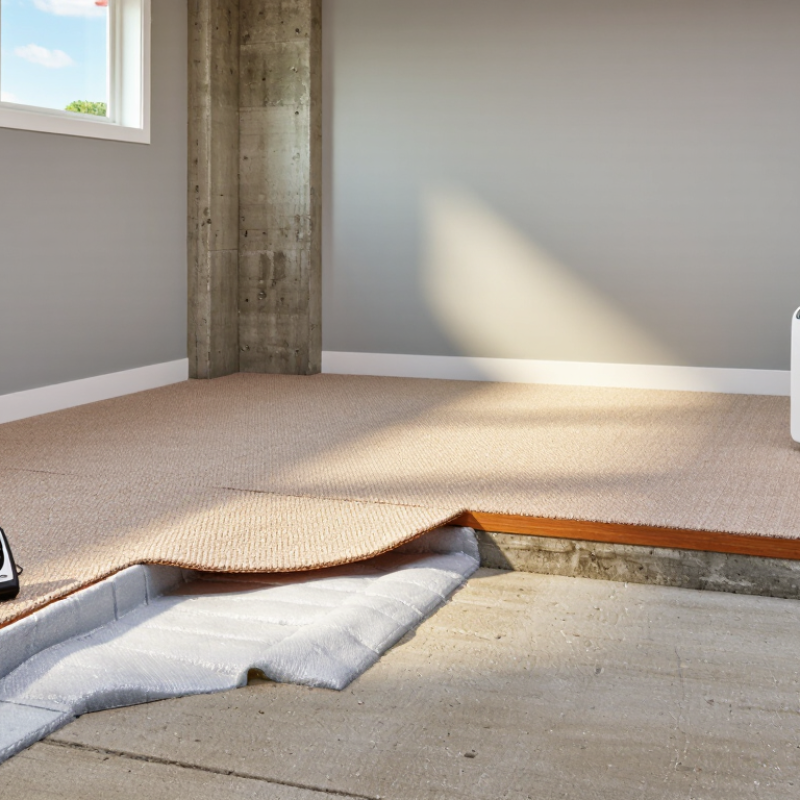
Identify Moisture Sources Beneath Basement Carpets
Basement carpet mold usually begins with hidden moisture, not visible staining. Check plumbing lines, foundation joints, floor cracks, and perimeter walls. Rain can push water through masonry, while humid air may condense on a cool concrete slab. HVAC drain pans and poorly sealed doors deserve attention too. A dry carpet surface proves little. The pad underneath may still feel cold, heavy, or slightly tacky.
Lift a corner carefully and inspect the pad, tack strips, and concrete. Use a calibrated moisture meter, then compare readings near walls with readings in the room center. Record conditions after rainfall and during humid weather. The U.S. Environmental Protection Agency recommends indoor relative humidity between 30% and 50%. Higher levels create better conditions for mold growth. EPA moisture-control guidance also advises drying wet materials within 24 to 48 hours. Do not rely only on smell. It helps, but it is not evidence. I have found that a small musty area can reflect a larger concealed problem, although one reading cannot explain everything. IICRC S500 guidance supports finding and removing the moisture source before structural drying. If water returns, replacing carpet alone wastes money and leaves the cause untouched.
Preventing mold under basement carpets begins with choosing materials that tolerate cool, damp conditions. A mold-resistant carpet can slow fungal growth, but it cannot solve serious water problems. Check the basement after heavy rain. Look for wall seepage, condensation, or a musty smell.
Choose a synthetic carpet with low moisture absorption and a breathable backing. Avoid thick natural-fiber carpets in basements unless moisture control is excellent. The underlay matters just as much. Select a closed-cell, moisture-resistant pad that does not hold water like a sponge. A thin pad may dry faster, although it can feel less comfortable underfoot. That trade-off is easy to underestimate.
Tips: Test the concrete floor with a moisture meter before installation. Keep readings within the flooring manufacturer’s recommended range. Leave small inspection areas near walls when possible. Clean spills quickly, and use a dehumidifier to maintain moderate humidity. Do not cover a damp floor just because it looks dry.
During installation, place carpet over a clean, smooth surface. Seal obvious cracks and correct drainage issues first. Keep furniture slightly raised to improve air movement. Inspect the carpet edges every few months, especially near exterior walls. If the underlay feels cool, soft, or swollen, investigate promptly. My own mistake was trusting a dry surface test after one sunny day. Basement moisture changes with the weather, so one inspection is not enough.
Before laying basement carpet, prepare the concrete floor carefully. Remove dust, old adhesive, and loose paint with a stiff brush and vacuum. Check for damp areas after heavy rain. A simple plastic-sheet test can reveal hidden moisture. Tape the sheet tightly to the slab for 24 hours. Condensation underneath suggests moisture moving through the concrete.
Keep the area dry.
Repair cracks wider than a hairline with a suitable concrete repair compound. Seal the wall-to-floor joint, where water often enters first. If the slab stays damp, install a properly specified vapor barrier or interior drainage system. Waterproofing paint alone may fail under hydrostatic pressure. The floor must also slope toward a working drain or sump system. Maintain indoor humidity below 60 percent with ventilation or a dehumidifier. Leave the concrete exposed until moisture readings meet the carpet manufacturer’s limit. This step is easy to rush, and that is where problems begin.
Use a moisture meter at several locations, not just the driest corner. Inspect plumbing, foundation walls, and nearby soil conditions. Even a well-sealed floor can develop mold if a pipe leaks later. A raised, breathable carpet underlay may reduce trapped moisture, but it cannot correct a wet slab. I would rather delay installation than cover a questionable surface. Small oversights, especially around edges, can create a musty smell beneath the carpet within weeks.
| Preparation Stage | Recommended Action | Practical Benchmark | Verification Method | Why It Helps Prevent Mold |
|---|---|---|---|---|
| 1. Inspect for Moisture Sources | Check walls, floor joints, plumbing, sump pits, windows, and floor drains for leaks or seepage before installing carpet. | No active leaks, standing water, or recurring damp spots. | Inspect after rainfall and record visible moisture, odors, and water entry points. | Carpet and padding can retain moisture against the concrete, creating conditions where mold may grow. |
| 2. Control Indoor Humidity | Operate a correctly sized dehumidifier and improve air circulation. Direct condensate to a drain or approved pump system. | Keep relative humidity below 60%; a range of 30%–50% is generally recommended for indoor spaces. | Use a calibrated digital hygrometer and check several areas of the basement. | Lower humidity reduces condensation and limits the moisture available for mold growth. |
| 3. Repair Water Entry | Repair plumbing leaks, seal wall penetrations, maintain gutters, extend downspouts away from the foundation, and correct surface drainage. | Downspouts should discharge away from the foundation; the surrounding soil should slope away from the building. | Run water through repaired plumbing and inspect the basement during or shortly after rain. | Waterproof coatings cannot compensate for unresolved leaks or hydrostatic pressure. |
| 4. Clean and Dry the Concrete | Remove dust, dirt, loose coatings, grease, and existing biological growth. Dry the surface completely before applying any coating. | The floor should be visibly clean, sound, and free of standing water or surface condensation. | Use a moisture meter suitable for concrete and perform a visual inspection under good lighting. | Clean, dry concrete provides better coating adhesion and removes contaminants that can support odor or microbial growth. |
| 5. Test Concrete Moisture | Measure moisture before selecting carpet, padding, adhesive, or a waterproofing system. | Meet the moisture limits specified by the flooring, adhesive, and coating manufacturers. | Use in-situ relative humidity testing in accordance with ASTM F2170, or another test method accepted by the selected flooring system. | Concrete may appear dry while still releasing enough vapor to dampen carpet padding. |
| 6. Check Surface Alkalinity | Test the concrete pH and follow the requirements of the flooring adhesive or coating system. | The pH must fall within the product manufacturer’s stated range. | Use a concrete surface-pH test kit according to its instructions. | Excessive alkalinity can damage adhesives and contribute to flooring failure, which may trap moisture below the carpet. |
| 7. Prepare Cracks and Joints | Repair non-structural cracks and seal appropriate floor-to-wall joints with compatible materials. Investigate structural movement separately. | No open pathways that allow water or vapor to reach the carpet system. | Inspect repaired areas for separation, dampness, or renewed cracking. | Cracks and joints can provide direct routes for moisture migration through the slab. |
| 8. Apply a Compatible Waterproofing System | Use a concrete-compatible vapor-control or waterproofing system designed for below-grade floors. Follow surface preparation, coverage, and curing instructions. | Apply only within the product’s stated temperature, humidity, and substrate-moisture limits. | Record product batch details, application rate, drying time, and the number of coats. | A compatible system can reduce liquid water entry and vapor transmission when correctly selected and installed. |
| 9. Allow Full Curing | Keep the basement ventilated and prevent foot traffic, furniture placement, or carpet installation until the system has cured. | Use the manufacturer’s stated cure time; do not rely only on a dry-to-touch surface. | Confirm the published recoat and floor-covering installation times. | Premature covering can trap residual moisture and weaken the waterproofing layer. |
| 10. Select Carpet Carefully | Choose moisture-resistant carpet and a low-moisture-absorption pad. Avoid installing carpet in areas with unresolved dampness or flooding history. | The carpet, pad, adhesive, and concrete moisture readings must be compatible as one flooring system. | Review technical data sheets and obtain written installation requirements where available. | Carpet padding is porous and can remain damp longer than the visible carpet surface. |
| 11. Maintain Airflow and Clearance | Keep furniture slightly away from walls, avoid blocking vents, and maintain airflow across the carpet surface. | No persistent condensation, musty odor, or damp areas beneath furniture. | Inspect concealed edges and low-airflow areas during routine checks. | Improved airflow helps surfaces dry and reduces hidden moisture accumulation. |
| 12. Monitor After Installation | Check humidity, odors, carpet edges, and the underside of accessible rugs or pads. Respond quickly to spills or leaks. | Maintain relative humidity below 60% and keep all carpet and padding dry. | Use a hygrometer continuously or check it at least weekly during humid seasons. | Early detection prevents a small moisture event from becoming concealed mold growth. |
Important: If the basement has recurring flooding, persistent seepage, extensive mold growth, or structural cracks, resolve the water problem and consult a qualified waterproofing or remediation professional before installing carpet.
China Best How To Prevent Mold Under Basement Carpets
Install basement carpet only after controlling moisture below and around the floor. The U.S. Environmental Protection Agency recommends keeping indoor relative humidity between 30% and 50%. Use a calibrated hygrometer at floor level, not only near the ceiling. A dehumidifier can help, but it cannot repair wall leaks or rising moisture. Check gutters, downspouts, sump systems, and foundation joints after heavy rain. Small cracks matter.
Before installation, test the concrete slab. ASTM F2170 measures internal relative humidity, while ASTM F1869 measures moisture vapor emission. Follow the flooring manufacturer’s limits and document every reading. Install a compatible moisture-control layer when needed, but do not seal a damp slab blindly. Trapped vapor may collect beneath the carpet pad. That mistake is easy to make.
Ventilation also needs balance. ASHRAE Standard 160 emphasizes managing moisture during building design and operation. Provide outdoor-air exchange when weather permits, while filtering humid air through mechanical ventilation. Keep furniture slightly away from basement walls, and leave inspection access near plumbing. The EPA advises drying wet materials within 24 to 48 hours to reduce mold growth risk. Lift carpet edges after spills and dry the pad separately. It is slower. It works better. Even careful installations can fail when seasonal humidity changes, so record humidity and inspect hidden edges monthly.
China Best How To Prevent Mold Under Basement Carpets
Inspect, Clean, and Maintain the Carpet Regularly
Basement carpets need frequent inspection because moisture often hides beneath them. Check the carpet weekly during wet seasons and monthly during dry weather. Lift corners near walls, furniture, and floor drains. Look for dark spots, raised edges, damp padding, or a musty smell. A moisture meter can reveal problems that the surface conceals. Do not ignore small changes.
Clean carefully. Vacuum slowly with a machine that captures fine particles. Remove loose dirt before it reaches the carpet backing. If a spill occurs, blot it with clean towels instead of rubbing. Excess water can sink into the padding. After cleaning, use fans and ventilation to dry both layers completely. Never place furniture back too soon. That mistake traps moisture.
Regular maintenance also includes checking pipes, windows, and basement humidity. Keep indoor humidity near 30–50 percent when possible. Inspect the carpet backing, not only its visible surface. Even careful homeowners miss hidden dampness. I would also question relying on smell alone; mold may develop before an odor appears. If flooding soaks the carpet or padding, stop normal cleaning and seek qualified assessment. Porous materials may require removal when they cannot dry fully. Record inspection dates and moisture readings, although records can be imperfect. The habit still makes changes easier to notice.
Choose synthetic carpet with low moisture absorption. A breathable backing helps air move. Avoid thick natural fibers unless moisture control is excellent. Mold-resistant carpet only slows growth. It cannot fix leaks.
Select a thin, closed-cell, moisture-resistant pad. It should not absorb water like a sponge. A thinner pad may dry faster, but it can feel less comfortable. That trade-off is easy to underestimate.
Use a moisture meter on the concrete slab. Internal humidity and vapor-emission tests provide better information. Follow the flooring manufacturer’s moisture limits. Record every reading. One sunny day proves little.
Check wall seepage, condensation, cracks, and musty odors. Inspect gutters, downspouts, drainage systems, and foundation joints after rain. Repair obvious leaks before covering the floor. Do not hide a damp slab.
Keep indoor relative humidity between 30% and 50%. Measure it with a calibrated hygrometer near floor level. A dehumidifier can help control moisture. It cannot repair rising water or wall leaks.
Provide outdoor-air exchange when weather conditions allow. Mechanical ventilation should filter humid incoming air. Keep furniture slightly away from basement walls. Airflow needs room.
Dry wet materials within 24 to 48 hours. Lift the carpet edge and dry the pad separately. Use fans and a dehumidifier to improve air movement. It is slower. It works better.
Inspect hidden edges every few months, especially near exterior walls. Monthly checks are wiser when seasonal humidity changes sharply. Look for swelling, softness, cool areas, or new odors. My own mistake was trusting one dry surface test.
Learning how to prevent mold under basement carpets begins with controlling moisture at its source. Check for leaks, condensation, damp walls, plumbing problems, and water seepage through the foundation. Before installation, make sure the basement floor is clean, dry, level, and properly waterproofed. A moisture barrier or suitable sealant can help reduce water intrusion. Choose carpet fibers designed to resist moisture and pair them with an underlay that allows limited airflow while avoiding materials that trap dampness.
Proper installation and ongoing care are equally important. Leave appropriate space around walls, avoid covering active moisture problems, and maintain good ventilation with fans, dehumidification, or controlled air circulation. Keep indoor humidity at a moderate level and respond quickly to spills or flooding. Inspect the carpet and underlay regularly for musty odors, discoloration, damp spots, or lifted edges. Prompt cleaning, drying, and replacement of affected materials can prevent small moisture issues from developing into persistent mold growth.

Pelvic Floor